
EP 2: I Lost My Entire Office Team. Here's What It Taught Me.
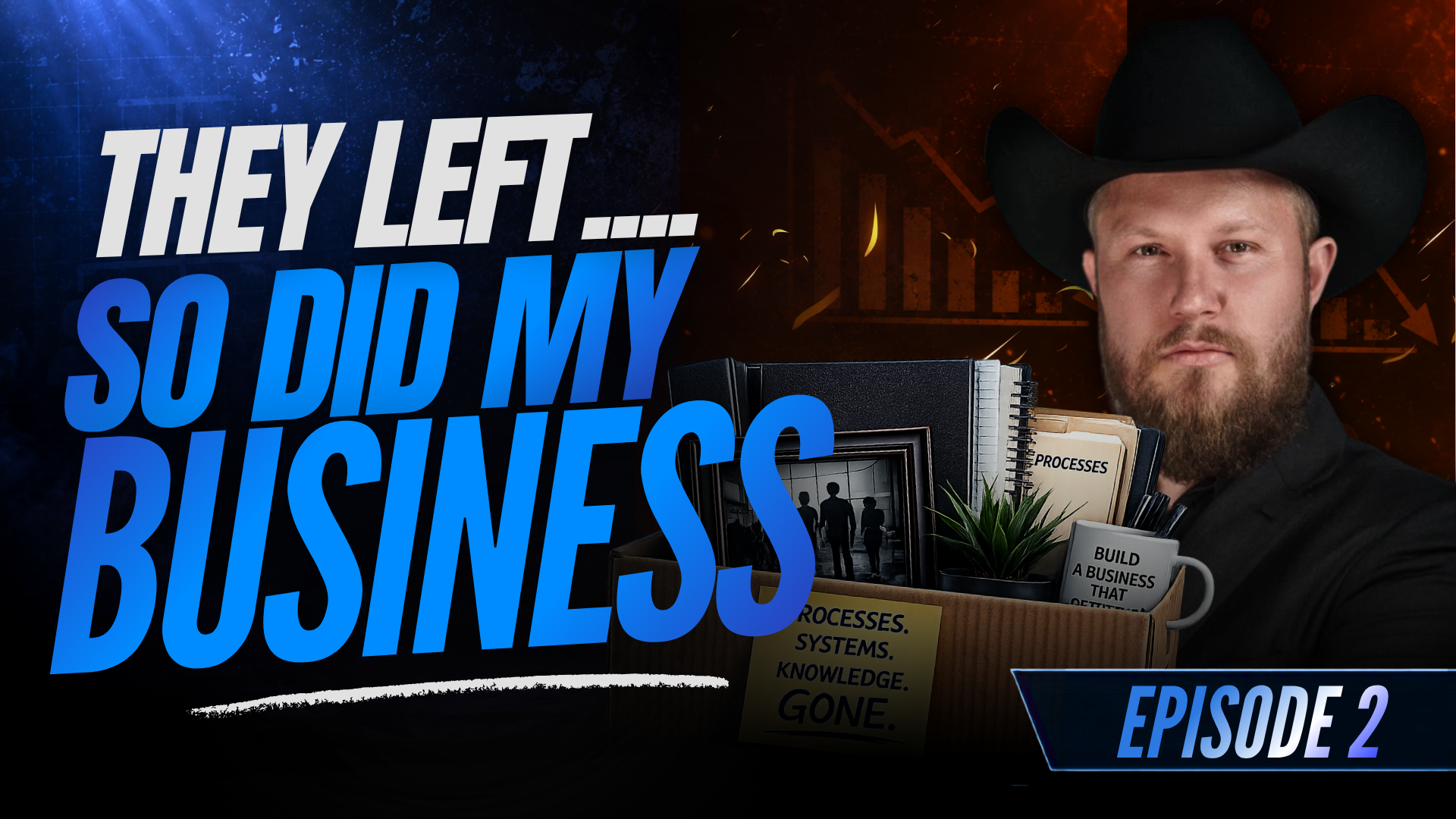
How to Reduce Key Person Risk Before Your Team Walks Out the Door
One summer, I lost my entire office team, and it didn't happen all at once, which somehow made it worse.A scheduler, a field manager, a customer service representative, and an operations manager all left within a matter of weeks. When they walked out the door, so did nearly everything I thought I knew about how my home cleaning company actually ran.
If your most important employee didn't show up tomorrow, would you know what breaks first?
This episode explores how to reduce key person risk before you're forced to and how to build a business where knowledge lives in systems instead of in people's heads.
Why Did This Become Such a Hard Summer?
My team had been dealing with quiet tension over who was responsible for what.
When my field manager gave me an ultimatum over a scheduling conflict, I let the scheduler go, thinking the problem was solved.
Within a week, the field manager quit anyway.
A few weeks later, I found out my customer service representative had left to start a competing home cleaning company, taking documents and processes for the role with her.
Then my operations manager gave notice too, choosing to focus on family.
By the end of the summer, my entire office team was gone.
Why Is This a Systems Problem, Not a People Problem?
I want to be direct about this. It isn't a story about a bad team.
Almost everyone who left simply moved on, the way people naturally do.
The real problem was that I had never built the business to survive those departures.
Nobody had written down how things actually worked, so when people left, the knowledge left with them.
What's the Hidden Cost of Key Person Risk?
The obvious cost is the operational scramble.
Customers notice delays, work falls behind, and the business feels unstable.
The cost I didn't expect was personal.
When your business depends on specific people to function, you can never fully step away.
I remember sitting at the pool with my kids, physically present but mentally solving business problems instead of enjoying the moment.
What Did I Do to Fix It?
Instead of documenting everything at once, I focused on the biggest pain points first.
- Documented the processes causing the most problems instead of creating one massive operations manual.
- Wrote down scheduling and customer service workflows exactly as they were actually performed.
- Turned each workflow into a simple, step by step checklist anyone could follow.
- Made documentation part of the business so every solved problem became a documented process.
What Happened the Next Time Someone Left?
When I later had to let another scheduler go, the transition was completely different.
The new hire stepped into a fully documented role with clear training, written procedures, and defined responsibilities.
Instead of carrying every process in my own head, I could simply verify that the work was being completed.
That gave me something I hadn't experienced before.
The freedom to be physically, mentally, and emotionally present with my family.
Final Takeaway
Ask yourself one question:
If your most important employee didn't show up tomorrow, what would break first?
Write that process down.
Document how it actually works.
Then move on to the next one.
That's how a fragile business becomes a resilient one.
Resources & Links
Visit: https://bit.ly/JhonLeBaron
Download the Free Resource: https://bit.ly/the-5-reaons
Facebook: https://bit.ly/JhonLeBaronFacebook
Instagram: https://bit.ly/JhonLeBaronInstagram