
EP 3: Do My Employees Stop Caring About My Business
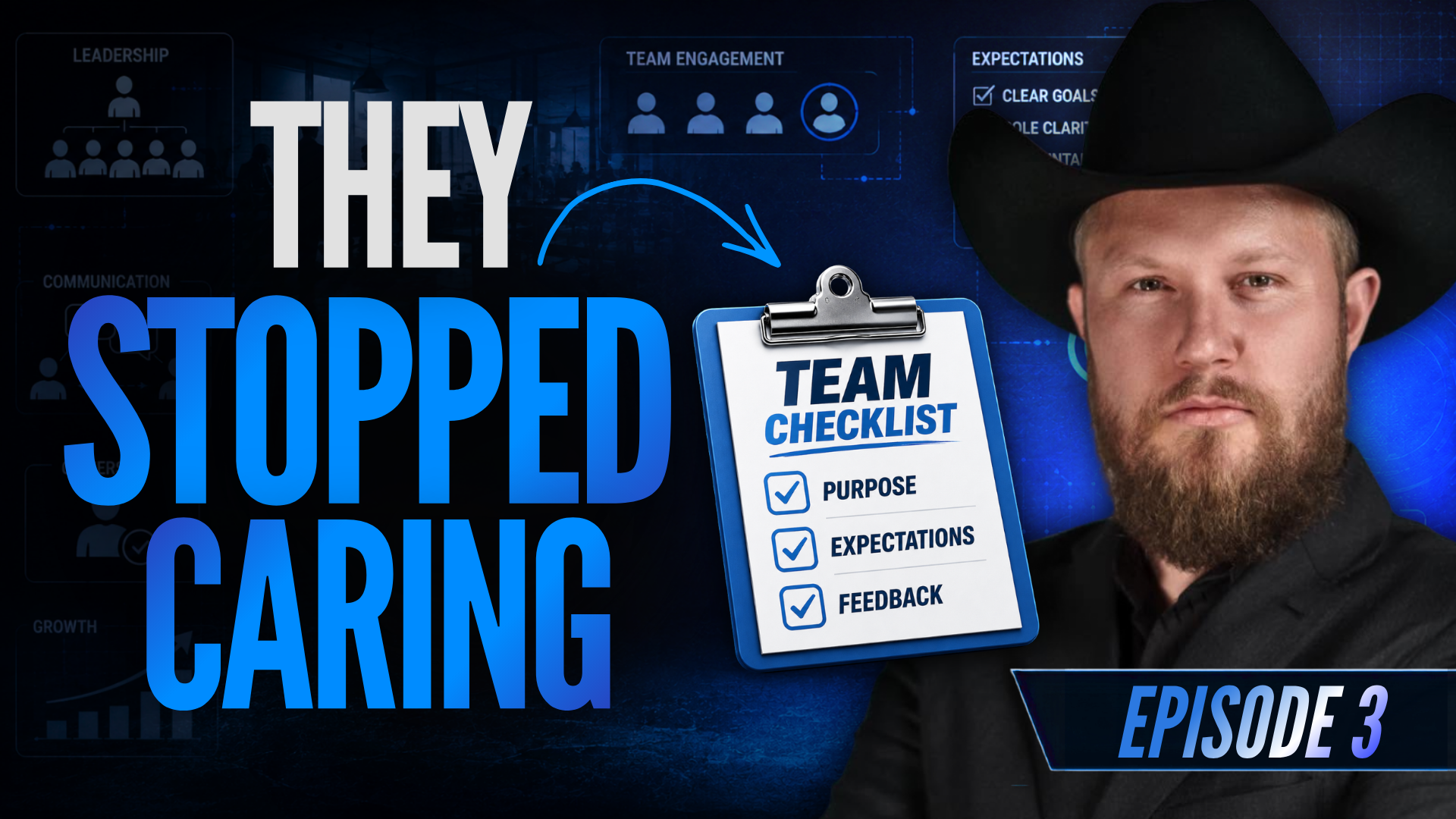
Why Employees Stop Caring, and the Three Leadership Gaps Behind It
Why do employees stop caring about the business they work for?I used to think it was a people problem. Quiet employees who had lost their spark. Then I realized the real issue was something I had never actually given them: clarity, purpose, and recognition.
This episode explores the three reasons employee disengagement happens and exactly what I changed at Primavera to build a more engaged team.
What Does a Disengaged Team Actually Look Like?
Disengagement is rarely dramatic.
People still clock in. Jobs still get done. Customers are still taken care of.
But the energy is gone.
Employees stop asking questions, stop bringing new ideas, and begin doing only what they're told.
That's exactly what happened with my team at Primavera when we had only two or three office employees.
What's the Real Cause Behind Employee Disengagement?
I used to ask myself why my team didn't care as much as I did.
Eventually, I realized I was asking the wrong question.
The better question was:
Have I actually given them a reason to care?
A disengaged team is almost always a symptom, not the problem itself.
In my experience, disengagement usually comes down to three leadership gaps:
- People don't know what winning looks like.
- People don't feel like their work matters.
- People don't feel seen.
Every one of those starts with leadership.
How Do You Define What "Done" Actually Looks Like?
If the only instruction you give a cleaning technician is, "Clean the house," their version of done may be completely different from yours.
Your expectation might include every baseboard, every corner, and every windowsill.
Without a documented standard they can refer back to, employees will naturally create their own version of success.
The solution is simple.
Create clear expectations using tools such as:
- Written checklists
- Standard operating procedures (SOPs)
- Short training videos
- Documented quality standards
The clearer the expectation, the more consistent the result.
How Do You Connect the Work to a Bigger Purpose?
Leadership isn't just telling people what to do.
It's helping them understand why the work matters.
At Primavera, I started showing every new hire a video about a husband and wife whose relationship improved after hiring a cleaning service.
That completely changed how we talked about our work.
We're not simply scrubbing toilets or vacuuming floors.
We're helping families experience less stress and stronger relationships.
When people understand the purpose behind their work, they show up differently.
How Do You Make Employees Feel Seen?
Most business owners, myself included, are quick to notice mistakes.
We're much slower to recognize great work.
When employees only hear from you when something goes wrong, they begin associating leadership with stress instead of encouragement.
Taking a moment to recognize someone's effort costs nothing.
But it can completely change your team's culture.
What Should You Do Today?
Choose one role on your team and ask yourself three questions:
- Have I clearly shown this person what great work looks like?
- Have I explained why their work matters?
- When was the last time I told them they did something well?
If you answer "no" to any of those questions, you've found your starting point.
Keep it simple.
Document what great performance looks like, explain why it matters, and have a genuine conversation with your employee.
That's how engaged teams are built.
Resources & Links
Visit: https://bit.ly/JhonLeBaron
Download the Free Resource: https://bit.ly/the-5-reaons
Facebook: https://bit.ly/JhonLeBaronFacebook
Instagram: https://bit.ly/JhonLeBaronInstagram