
How to Beat Shiny Object Syndrome and Stay Focused on What's Already Working
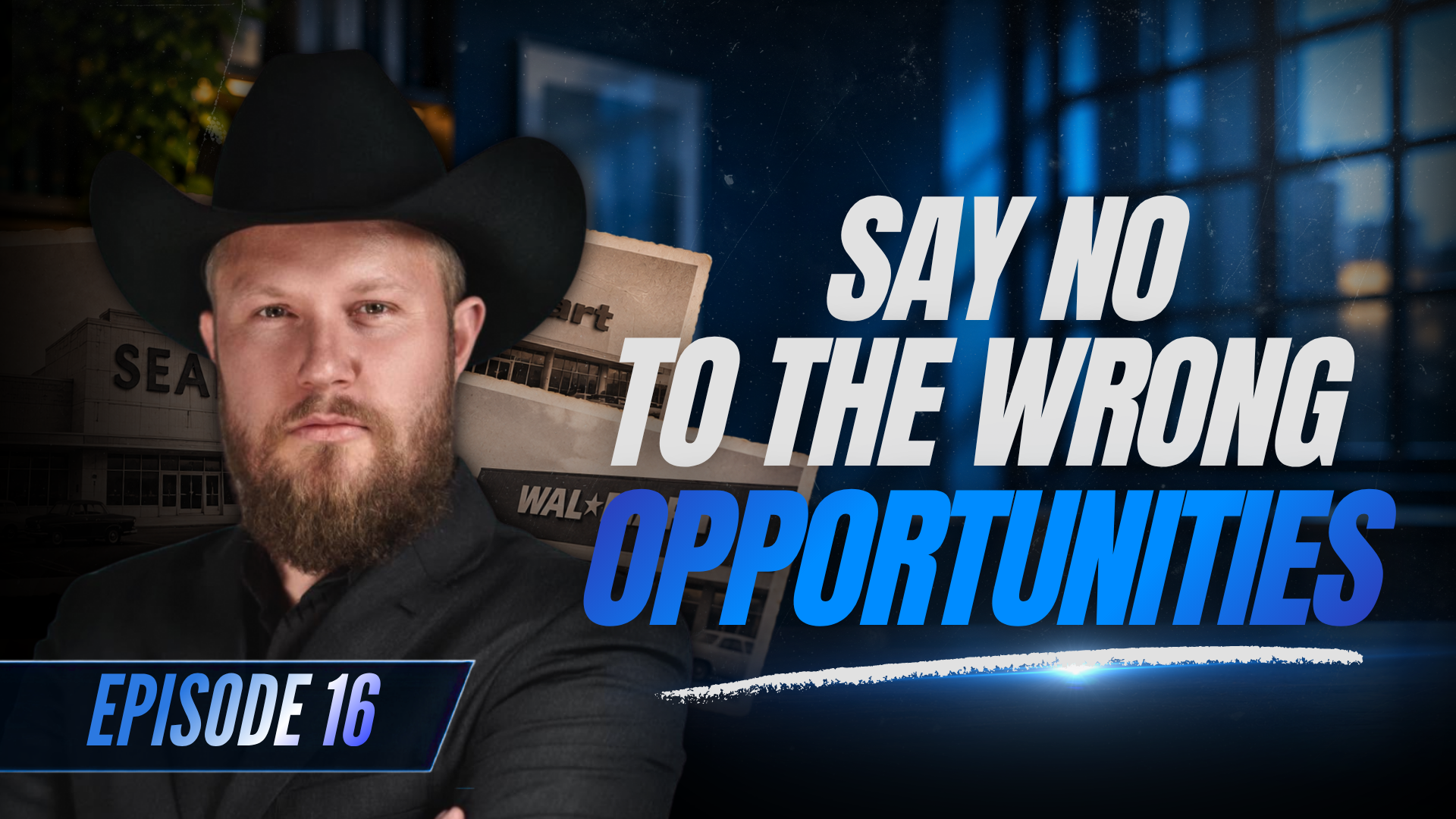
Back in 1962, two discount stores opened their very first locations. One of them went on to become the biggest retailer in the world. The other ended up bankrupt, despite having a much bigger head start.
There's a lesson in that story every business owner needs to hear.
What Actually Happened With Sears, Kmart, and Walmart?
In 1962, Sears was the biggest retailer in America, the place families went for tools, appliances, clothes, the massive catalog.
That same year, Kmart opened just outside Detroit, and a few months later Sam Walton opened the first Walmart, a tiny company in small towns the big retailers weren't interested in.
If you'd bet on which would succeed, you'd have picked Kmart every time, it had the money and the momentum.
Through the 1980s, Sears expanded into other industries entirely, a stockbroker firm, Coldwell Banker real estate, Allstate insurance, the Discover card, something they literally called "socks and stocks."
Kmart did something similar in retail, buying Borders, a home improvement chain, Sports Authority, OfficeMax.
Meanwhile Walmart just kept getting better at what it already did, lower prices, faster product to stores, better inventory systems, boring, unglamorous work.
By the 1990s, Walmart passed Sears as the biggest retailer in the country.
Kmart filed for bankruptcy in 2002, merged with Sears a few years later, and the combined company filed for bankruptcy again in 2018.
Walmart just kept growing.
What's the Actual Lesson Here?
While Sears and Kmart were investing in new ideas and new industries, Walmart was investing in getting better at its one thing.
Just because Sears had the ability to get into all those different businesses didn't mean it should have.
That's a question worth asking yourself too: just because you can do something doesn't mean you should, and a great opportunity isn't automatically the right opportunity for you.
Did This Ever Happen in Your Own Business?
Yes.
Years ago at Primavera we decided to get into window cleaning. We were already cleaning people's homes, had customers who trusted us, so it seemed obvious.
We invested in brand-new equipment and really thought we could build something out of it.
What actually happened is we lost focus.
All that time and energy went into growing window cleaning while our house cleaning business, the one with real potential, wasn't growing the way it should have.
I was reading a book called The Pumpkin Plan by Mike Michalowicz at the time, which talks about how farmers grow prize-winning pumpkins: they pick the one with the most potential and clip off every other pumpkin on the vine, so all the plant's energy goes into growing that one.
That reframed everything for me.
We had a house cleaning business with enormous potential, and we were dividing our attention away from it.
Once we put all our energy into building a really good house cleaning company, we ended up making the Inc. 5000 list as one of the fastest-growing companies in America.
Why Is Every "Yes" Actually a Cost, Even When It Doesn't Feel Like One Right Away?
When you say yes to a new service, you're committing time, money, and attention, and your team has to help figure it out too, which means something else gets less attention.
Sometimes that cost shows up at home: more evenings working, weekend calls, a postponed family vacation.
Every yes to something is a no to something else, and it's worth asking whether that commitment is actually getting you closer to the life you're trying to build.
How Do You Know Which Opportunities Are Worth Saying Yes To?
Start with your life, not your business.
What do you actually want your days to look like, how much time with family, how much travel, what kind of company do you want for your team?
Once that vision is clear, it becomes your North star for every opportunity that comes along.
Ask yourself if the opportunity supports that vision.
If yes, then look at timing and resources.
If it doesn't fit, it's okay to say no, even if you know it could make real money.
What If a Customer Asks for a Service You Don't Offer?
That's actually a good problem, it means they trust you.
You don't have to add the service yourself.
If someone asks for carpet cleaning, you can refer them to a reputable carpet cleaning company in your area, and that relationship can end up sending business back to you too.
If you genuinely want to get into that service someday, that's fine, just make sure it fits what you're actually trying to build.
How Do You Say No to a Good Idea Without Feeling Like You're Missing Out?
Keep an ideas list.
When something comes up, write it down instead of acting on it immediately.
Once a quarter, look at the list and see what's still exciting and actually fits your vision, and what can just be crossed off.
You'll be surprised how many ideas don't hold up once some time passes.
And share your vision with your team too, since they'll bring you good ideas of their own, and they need to know what you're actually building toward so they can tell which ideas help and which don't.
This week, write down the vision for your life, as much detail as you want, your family, your time, your finances, your ideal week.
Then figure out what kind of business you actually need to support that life.
There will always be somebody doing something bigger or faster, and that's okay.
You don't have to keep up with them, and you don't have to act on every great idea that pops into your head.
Resources & Links
Visit: https://bit.ly/JhonLeBaron
Download the free resource: https://bit.ly/Jhons5Reasons
Facebook: https://bit.ly/JhonLeBaronFacebook
Instagram: https://bit.ly/JhonLeBaronInstagram
Check out Beyond the Office Book: https://www.beyondtheofficebook.com/